
Ask a beginner what makes a successful trader, and you’ll often hear the same answer:
“Winning lots of trades.”
It sounds logical.
But the truth is, successful trading isn’t just about how often you win.
It’s about how much you win when you’re right compared to how much you lose when you’re wrong.
That’s where the Risk-Reward Ratio comes in.
Once you understand it, you’ll stop chasing “perfect” trades and start thinking like a professional.
What Is Risk-Reward Ratio?
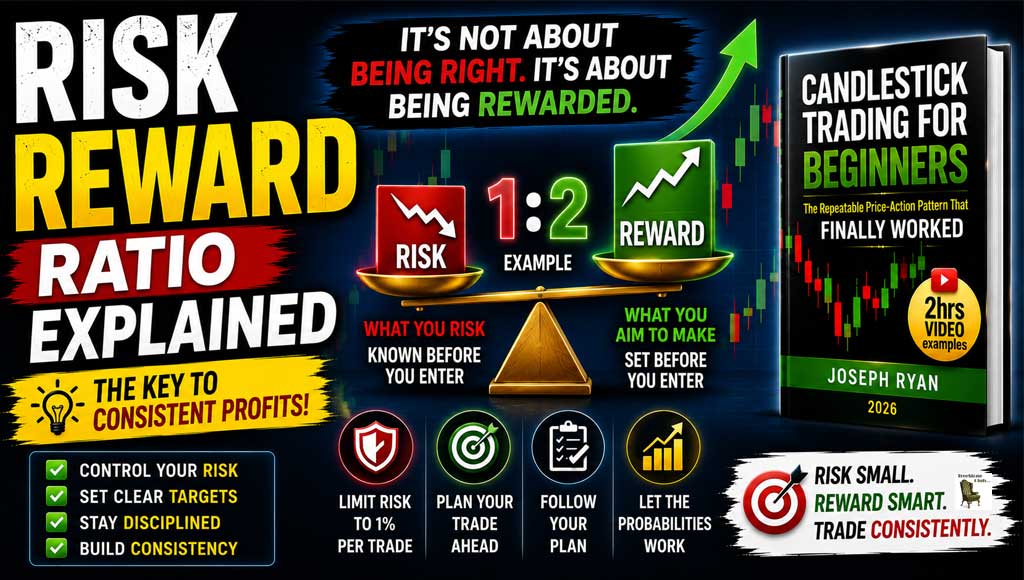
Your Risk-Reward Ratio (R:R) compares how much you’re prepared to lose on a trade with how much you expect to make if it reaches your target.
For example:
- Risk $100 to make $100 = 1:1
- Risk $100 to make $200 = 1:2
- Risk $100 to make $300 = 1:3
The first number is always your potential loss.
The second number is your potential reward.
Before I enter any trade, I already know both numbers.
Why It Matters
Every trading strategy has losing trades.
Mine certainly does.
The goal isn’t to avoid losses.
The goal is to make sure the winners outweigh the losers over time.
That’s why every trade should have a clearly defined stop-loss and take-profit before you enter.
If you don’t know where you’re getting out, you don’t have a trading plan.
My Approach: Keeping It Simple
Some traders constantly change their targets.
Others move their stop-loss during the trade.
I prefer a mechanical approach.
With my Double Top and Double Bottom strategy:
- My stop-loss is fixed by the chart.
- My take-profit is fixed before I enter.
- I don’t move either because of emotion.
For me, consistency is more important than squeezing every last pip from a trade.
Why I Use a 1:1 Risk-Reward Ratio
Some traders aim for 1:2 or even 1:3 on every trade.
There’s nothing wrong with that if it suits their strategy.
In my own method, I use a fixed 1:1 risk-reward ratio.
Why?
Because my strategy is built around:
- High-quality Double Top and Double Bottom patterns
- Mechanical entries
- Fixed stop-loss placement
- Consistent execution
A simple 1:1 target removes guesswork and makes every trade follow the same process.
The objective isn’t to hit home runs.
It’s to repeat a proven routine over and over again.
An Example Trade
Imagine your account is $10,000.
Following my 1% Risk Rule, you’re willing to risk $100.
You identify a valid Double Top.
Your stop-loss is 20 pips above the entry.
Your take-profit is placed 20 pips below the entry.
If the trade wins:
+$100
If it loses:
–$100
The outcome of any single trade isn’t important.
Following the same process over hundreds of trades is.
Risk Comes Before Reward
One habit separates experienced traders from beginners.
Professionals ask:
“How much could I lose?”
Beginners ask:
“How much could I make?”
That’s a huge difference.
Protecting your account always comes first.
Profits are simply the result of following good habits.
Common Risk-Reward Mistakes
Entering Without a Target
If you don’t know where you’re taking profit, you’re trading on hope instead of a plan.
Moving Your Target Mid-Trade
Greed can turn a good trade into a losing one.
Decide your target before you enter.
Moving Your Stop-Loss
A stop-loss exists to protect your capital.
Moving it further away usually means you’re protecting your ego instead.
Ignoring Position Size
Risk isn’t determined by your stop-loss alone.
Your position size matters just as much.
That’s why I calculate my position size after I’ve identified where the stop belongs.
How Risk-Reward Fits My Trading Routine
Every trade follows the same sequence.
- Find a valid Double Top or Double Bottom.
- Mark the neckline.
- Place the stop-loss according to the chart.
- Calculate position size using the 1% Risk Rule.
- Place the pending order.
- Set a fixed 1:1 take-profit.
- Let the trade play out without interference.
No chasing.
No guessing.
No changing the rules halfway through.
Risk Management Is More Important Than Being Right
One of the biggest mindset shifts in trading is accepting that you don’t need to win every trade.
Even a good strategy will have losing trades.
What matters is:
- Keeping losses small.
- Following your plan.
- Staying consistent.
- Letting the probabilities work over time.
The traders who survive aren’t the ones who never lose.
They’re the ones who never let one loss become a disaster.
Want to See the Complete Trading Method?
Risk-reward is only one piece of the puzzle.
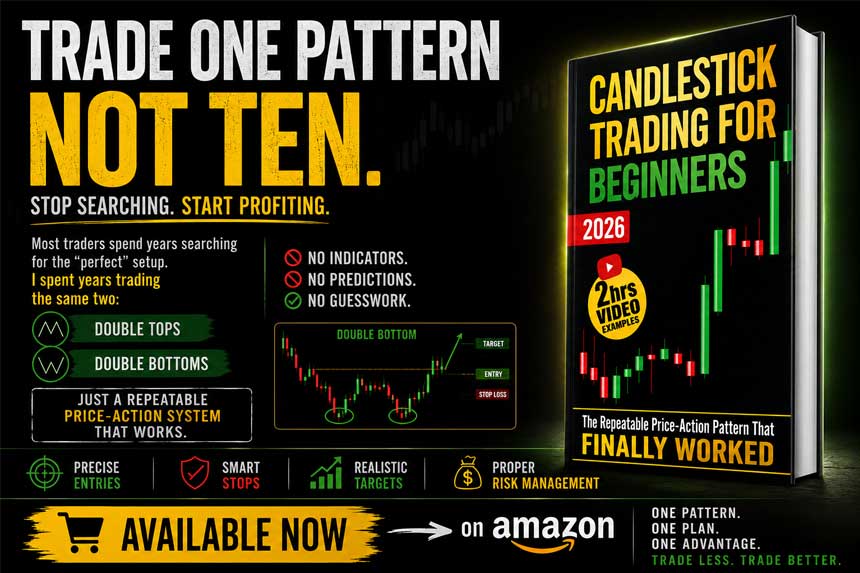
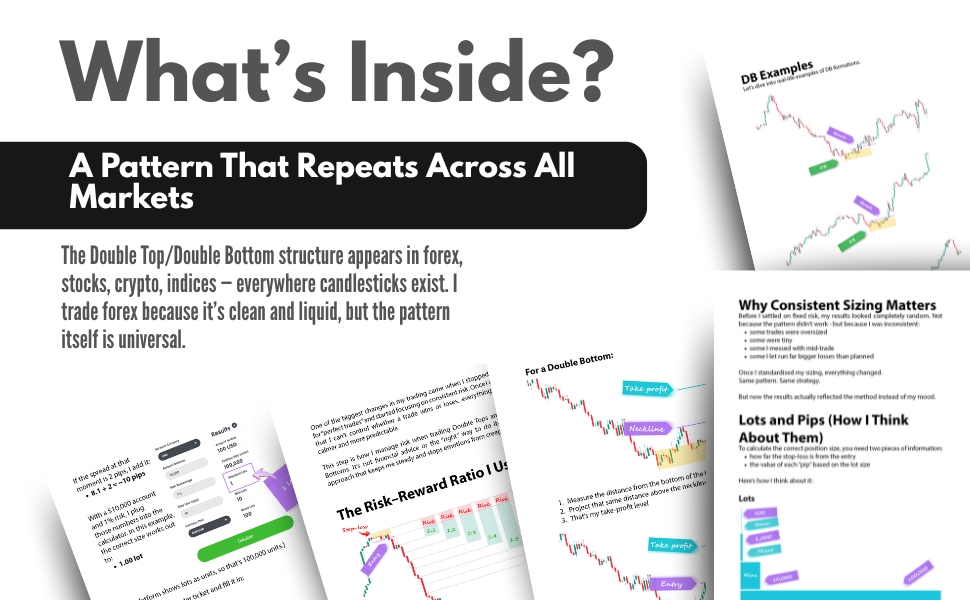
In Candlestick Trading for Beginners, I explain how I combine:
✔ Double Top and Double Bottom patterns
✔ Pending order entries
✔ Fixed stop-loss placement
✔ Fixed 1:1 take-profit targets
✔ Position sizing using the 1% Risk Rule
✔ Daily routines that help remove emotion from trading
Everything works together as one simple, repeatable system designed for beginners who want a structured approach without cluttering their charts with indicators.
Check it out on Amazon.com
Check it out on Amazon.com
Final Thoughts
Risk-Reward Ratio isn’t about finding the biggest possible winner.
It’s about creating a trading process that’s repeatable, disciplined, and consistent.
Know your risk before you enter.
Know your target before you click the button.
Protect your capital at all costs.
Because in trading, it’s not the occasional spectacular trade that builds an account.
It’s hundreds of well-managed trades, executed one after another, with patience and discipline.